




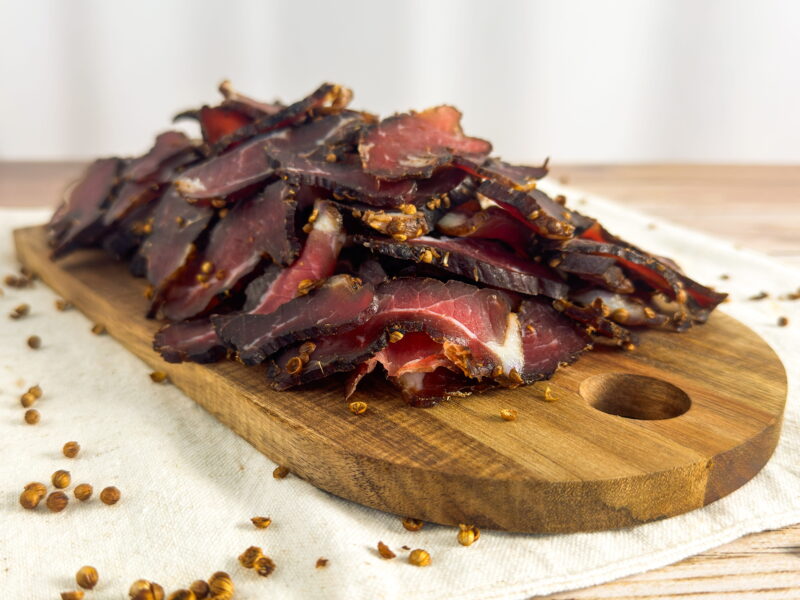
Biltong is a traditional South African air-dried, cured meat known for its rich flavour, tender texture, and high protein content. Made from thick cuts of premium South African beef, cured in vinegar, salt, coriander, and black pepper, then slowly air-dried without heat, biltong is fundamentally different from jerky. The result is a savoury, tangy, protein-dense snack that has been part of Southern African culture for centuries and is now enjoyed worldwide.
Unlike heavily processed meat snacks, authentic biltong relies on time-tested methods, simple ingredients, and patience. From farm to slicing board, the process is designed to preserve flavour, texture, and nutrients, not mask them.
Where Does Biltong Come From?
Biltong originated in Southern Africa as a practical solution to meat preservation long before refrigeration existed. Indigenous communities already understood how to preserve meat using salt, air, and natural drying conditions. When Dutch settlers arrived in the 17th century, they introduced vinegar and spices such as coriander and black pepper, refining the method into what we recognise today as biltong.
For generations, biltong was essential for long journeys, farming life, and survival during times when fresh food was scarce. Over time, it evolved from a necessity into a cultural staple, found at butcheries, family gatherings, road trips, and braais across South Africa.
Today, biltong remains deeply rooted in South African food culture, valued not only for its practicality but for its unmistakable taste and texture.
What Meat Is Used to Make Biltong?
Beef Biltong (The Most Popular Choice)
Beef is by far the most common meat used to make biltong. Cuts such as silverside, topside, sirloin, or rump are preferred because they offer the right balance of lean meat and texture. When properly cured and air-dried, premium South African beef develops a deep, meaty flavour with a tender chew.
This is the style most people think of when they hear the word “biltong”, classic, satisfying, and versatile. Our Beef Biltong is the natural place to start.
Game Biltong Explained
Southern Africa’s abundance of game meat has also shaped biltong traditions. Game biltong is made from animals such as kudu, springbok, and ostrich. These meats are naturally leaner and slightly darker in colour, with a more pronounced, earthy flavour.
Game biltong is prized for its richness and uniqueness, and kudu biltong in particular has become one of the most sought-after varieties for those looking for something beyond beef.
Traditional Biltong Ingredients
Authentic biltong relies on a short, deliberate list of ingredients. Each plays a specific role in flavour, preservation, and texture.
- Vinegar — essential for curing the meat, adding tang, and inhibiting bacterial growth
- Salt — draws out moisture and preserves the meat
- Coriander — the signature spice that defines traditional biltong flavour
- Black pepper — adds warmth and depth
Some modern variations may include chilli or garlic, but traditional biltong remains firmly vinegar-based and free from heavy marinades, soy sauces, or artificial flavourings.
How Is Biltong Made?
Air-Dried, Not Cooked
The defining feature of biltong is that it’s air-dried, not heat-dehydrated. This distinction is critical. Thick strips of meat are cured in vinegar, coated with salt and spices, then hung in a well-ventilated space to dry slowly and naturally.
No cooking, smoking, or high temperatures are used. This slow, traditional drying process preserves the meat’s natural proteins and creates biltong’s characteristic tender-yet-chewy texture. Exactly how long a batch takes and how it’s finished is part of what separates one producer’s biltong from another, which is why every producer treats their process as their own.
Depending on thickness and personal preference, biltong can range from moist (“wet”) to firm and dry.
What Does Biltong Taste Like?
Biltong has a rich, savoury flavour with a gentle tang from vinegar and warm spice notes from coriander and pepper. Unlike jerky, which is often sweet or smoky, biltong tastes closer to cured steak.
Texture and Fat Content
Texture depends on drying time, cut thickness, and fat content. Lean biltong is firmer and higher in protein, while fattier biltong offers a softer bite and deeper flavour. Traditional South African biltong often includes a balance of meat and fat, known locally as geelvet, which many consider the most flavourful style.
Biltong vs Jerky: Not the Same Thing
Although often compared, biltong and jerky are fundamentally different products.
| Biltong | Jerky | |
|---|---|---|
| Drying method | Air-dried at low temperatures | Heat-dehydrated or cooked |
| Ingredients | Vinegar, salt, and spices | Often sugar, soy sauce, and sweet marinades |
| Texture | Tender and chewy | Typically drier and tougher |
| Thickness | Cut thick | Sliced thin |
These differences explain why biltong retains a more natural meat flavour and softer texture, while jerky leans toward smoky or sweet profiles.
Is Biltong Healthy? Nutritional Value Explained
Biltong is widely regarded as a high-protein, low-carbohydrate snack, especially when compared to processed snack foods.
Why Biltong Is High in Protein
During the drying process, moisture is removed from the meat, concentrating protein and nutrients into every slice. Because biltong is air-dried rather than cooked, the protein structure remains largely intact.
Typical Biltong Nutrition Per 100g (Approximate)
Nutritional values vary depending on cut, fat content, and dryness level. Typical medium-dry beef biltong contains approximately:
- Calories: ~280–320 kcal
- Protein: ~60–80 g
- Fat: ~10–15 g
- Carbohydrates: ~0–5 g
- Sugar: minimal
- Sodium: moderate to high (due to curing)
This makes biltong popular among people following low-carb, keto, or paleo-style eating patterns, as well as those looking for a convenient protein source.
Lean vs Fatty Biltong
Lean biltong offers higher protein and lower fat, while fatty biltong offers richer flavour and higher calories. Choosing between them comes down to personal preference rather than quality.
Biltong vs Droëwors: What’s the Difference?
Biltong and droëwors are often found side by side, but they are not the same. Biltong is made from whole muscle meat, cured and air-dried in strips, while droëwors consists of dried sausage made from minced meat and spices.
Droëwors is thinner, round, and snappier in texture, while biltong offers a meatier bite. Both are traditional South African snacks, but biltong remains the more versatile and protein-dense option.
How Is Biltong Traditionally Eaten?
Biltong is most commonly eaten as a snack, sliced thin or torn by hand. In South Africa, it’s often enjoyed with a cold beer, at braais and social gatherings, on road trips, or as a post-gym protein snack. It’s also used as an ingredient in sandwiches, salads, and snack boards, adding depth and savoury flavour without heavy processing.
Why Authentic South African Biltong Matters
Not all products labelled “biltong” follow traditional methods. Authentic South African biltong is defined by air-drying with no heat, vinegar-based curing, thick cuts of meat, and minimal, natural ingredients.
When shortcuts are taken, such as using heat, sugar-heavy marinades, or artificial preservatives, the result may resemble jerky more than true biltong.
Where to Buy Authentic South African Biltong Online
For those looking to enjoy real biltong made using traditional South African methods, freshness, sourcing, and preparation matter.
Oubaas Biltong specialises in authentic air-dried biltong and droëwors, freshly prepared, sliced, and delivered nationwide. By focusing on classic techniques and premium South African beef, the goal is simple: preserve the flavour, texture, and heritage that make biltong what it is. Browse our full range to get started.
More Than Just a Snack
Biltong’s journey from survival food to global delicacy reflects South African ingenuity and respect for quality ingredients. It’s a product shaped by history, climate, patience, and craft, and one that continues to stand apart in a world of heavily processed snacks.
Whether you’re discovering biltong for the first time or grew up with it, understanding how it’s made and why it’s different deepens appreciation for every slice.
Frequently Asked Questions
What is biltong made of?
Biltong is made from thick cuts of premium South African beef, cured in vinegar, salt, coriander, and black pepper, then air-dried without heat.
Is biltong the same as jerky?
No. Biltong is air-dried at low temperatures using vinegar and spices, while jerky is heat-dehydrated or cooked and often uses sugar or soy-based marinades. Biltong is cut thicker and has a more tender, chewy texture.
Is biltong healthy?
Biltong is a high-protein, low-carbohydrate snack. A typical 100g serving of medium-dry beef biltong contains roughly 60–80g of protein and very little sugar, making it popular for low-carb, keto, and paleo-style diets.
What’s the difference between biltong and droëwors?
Biltong is made from whole cuts of meat cured and air-dried in strips, while droëwors is minced meat mixed with spices and dried in a sausage casing. Biltong has a meatier chew, droëwors has a firmer, snappier bite.
What is geelvet biltong?
Geelvet is the Afrikaans word for the yellow fat layer left on certain biltong cuts. It’s associated with C-grade beef and gives the biltong a richer, softer, more traditional flavour.