




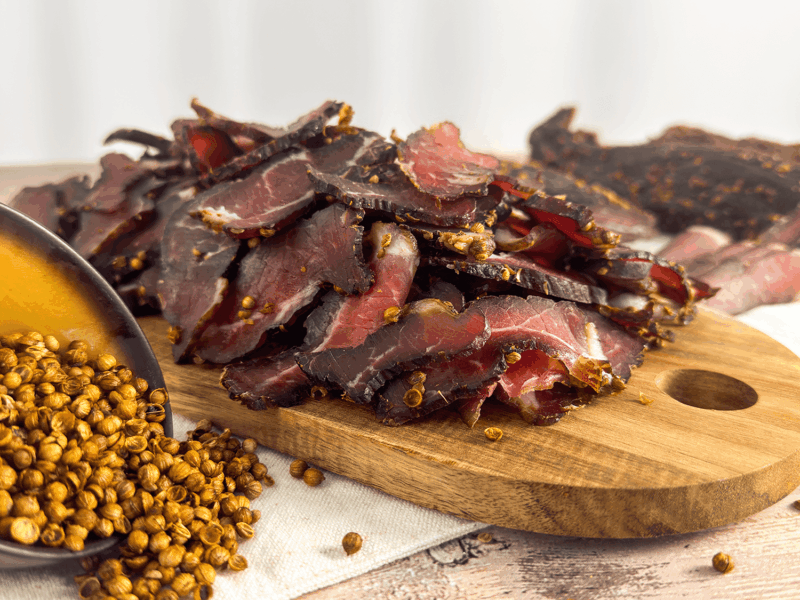
Geelvet biltong is beef biltong made with the natural fat layer, called geelvet (Afrikaans for “yellow fat”), left intact on the meat. South Africans love it for the richer flavour and softer bite the fat adds compared to lean biltong cuts. If you’ve ever wondered why some biltong tastes noticeably richer than others, the fat layer is usually why.
What Does “Geelvet” Mean?
Geelvet is Afrikaans for “yellow fat.” The term refers to the layer of golden-coloured fat found on certain cuts of beef, which is left on for biltong rather than trimmed away. Geelvet is most closely associated with C-grade beef under South Africa’s beef grading system, and it’s closely tied to the broader yellow fat vs white fat biltong comparison, which we cover in more detail in a separate article.
Why Is the Fat Yellow?
The short answer: yellow fat is mainly a grade and age characteristic. South Africa’s beef grading system runs from A through C based on the age of the animal at slaughter, and older, C-grade cattle typically develop a deeper, more golden-coloured fat than younger A-grade animals. It’s a natural sign of the animal’s grade, not a quality defect. For the full breakdown of yellow fat versus white fat in biltong, see our dedicated article.
What Does Geelvet Biltong Taste Like?
Geelvet biltong tastes richer, softer, and more flavourful than lean biltong, thanks to the fat rendering into the meat as it dries. Where lean Beef Biltong has a firmer, drier chew, geelvet has a softer bite and a fuller, almost buttery finish. The fat doesn’t just add calories, it carries flavour through the whole piece, which is why so many South Africans specifically ask for it by name at the butcher or biltong counter.
Geelvet Biltong vs Lean Biltong: Which Should You Choose?
Neither is “better,” it comes down to personal preference and how you plan to eat it.
| Geelvet Biltong | Lean Biltong | |
|---|---|---|
| Fat content | Higher | Low to none |
| Texture | Softer, moist | Firmer, drier |
| Flavour intensity | Rich, fuller | Cleaner, meatier |
| Best for | Snacking, braais, traditionalists | Lower-fat preference, longer shelf life |
If you grew up eating biltong with the fat on, geelvet will likely feel like the “real” version. If you prefer a leaner snack, Beef Biltong is the better starting point.
Is Geelvet Biltong Fatty or Unhealthy?
Geelvet biltong has a higher fat content than lean biltong, which means more calories per bite, but it’s not unhealthy on its own. Biltong as a whole remains a high-protein, low-carb snack. For the full nutritional picture, including protein content and how biltong fits into a balanced diet, see our what is biltong article.
Why Does Geelvet Biltong Price Vary So Much?
Geelvet biltong pricing mostly comes down to three things: weight, whether it’s a whole piece or pre-sliced, and the fat-to-meat ratio in that specific cut.
- Weight: Most geelvet biltong is priced per 100g or per kg. Smaller packs cost more per 100g than buying in bulk, since packaging and handling costs are spread across less product.
- Whole piece vs sliced: A whole piece typically costs less per 100g than pre-sliced biltong, since slicing adds a labour step.
- Fat-to-meat ratio: This is where pricing differs most between suppliers. Some price higher-fat cuts at a premium because of the flavour and demand. Others price them lower than lean cuts, since fat by weight effectively means less actual meat in the pack.
This is also why two geelvet biltong listings that look similar in photos can land at very different prices. It’s worth checking the actual weight and cut type rather than comparing prices at a glance.
Is Geelvet Biltong Available at Oubaas Biltong?
Not yet, geelvet is one of the products we’re planning to add as our range grows. In the meantime, our Beef Biltong is the closest place to start if you’re after that classic South African flavour, and it’s worth checking back or keeping an eye on our full range as we expand. Building a snack board in the meantime? Pair your biltong with our chutney biltong wheels or chilli biltong sticks for variety.
Frequently Asked Questions
What is geelvet biltong?
Geelvet biltong is beef biltong made with the natural yellow fat layer left on the meat, giving it a richer flavour and softer texture than lean biltong.
What causes the yellow colour in geelvet biltong?
Yellow fat is mainly linked to beef grade and the age of the animal at slaughter. Older, C-grade cattle typically develop a more golden-coloured fat than younger A-grade animals.
Is geelvet biltong the same as fatty biltong?
Yes, geelvet refers specifically to the yellow fat layer on the meat. “Fatty biltong” is just a more casual way of describing the same thing.
Why does geelvet biltong price vary so much?
Price mainly depends on weight, whether the biltong is a whole piece or pre-sliced, and the fat-to-meat ratio in that particular cut.
Is geelvet biltong healthy?
Geelvet biltong has more fat and calories than lean biltong, but it’s still a high-protein snack. It fits into a balanced diet like any other biltong, just with a richer flavour profile.