




If you’ve ever tasted game biltong, chances are kudu biltong was your first. For many South Africans, kudu biltong holds a special place — it’s the game meat that started a lifetime love of biltong beyond beef.
But what exactly is kudu biltong, where does it come from, and what makes it so different from regular beef biltong?
This guide covers everything you need to know about kudu biltong — from the animal itself to the flavour, the nutrition, and why it remains one of the most sought-after game biltong varieties in South Africa.
What Is a Kudu?
The kudu (Tragelaphus strepsiceros) is one of Africa’s most iconic antelope species. Known for the male’s dramatic spiral horns, kudu are large, powerful animals found across southern and eastern Africa.
In South Africa, kudu are commonly found in bushveld regions such as Limpopo, Mpumalanga, the Northern Cape, and parts of the Eastern Cape. They graze and browse on a wide variety of wild vegetation, which directly influences the distinctive flavour of their meat.
Kudu are a prized game animal — not only for their impressive size but for the exceptional quality of their lean, flavourful meat.
What Is Kudu Biltong?
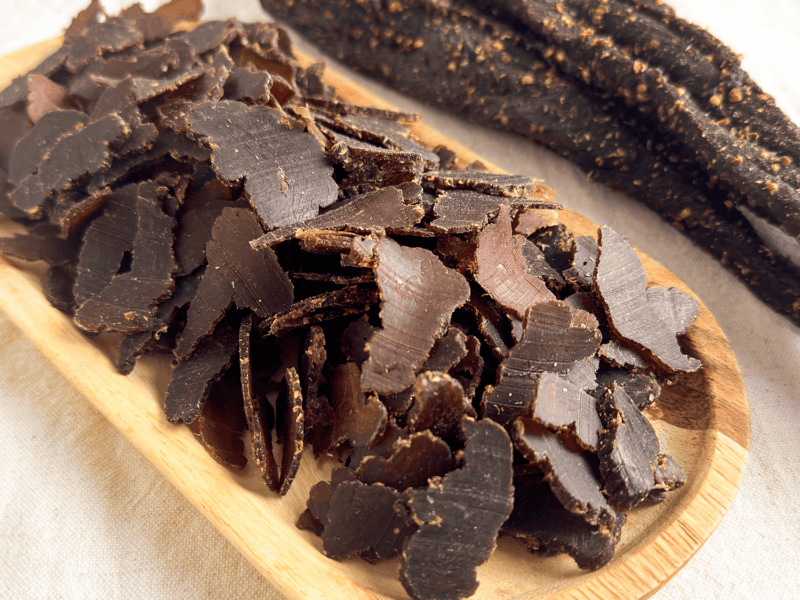
Kudu biltong is biltong made from the meat of the kudu antelope, traditionally cured with salt, vinegar, and spices, then slowly air-dried using the same methods used for beef biltong.
Because kudu are wild animals that roam freely and feed on natural vegetation, their meat is naturally lean and rich in flavour.
Kudu biltong is considered a premium game biltong product in South Africa — valued for its unique flavour profile, its leanness, and its connection to South African hunting and outdoor culture.
What Does Kudu Biltong Taste Like?
Kudu biltong has a distinctly different flavour compared to beef biltong. It is:
- Richer and more intense than beef biltong
- Slightly gamey with earthy, wild undertones
- Leaner with very little visible fat
- Firm in texture with a satisfying chew
The gamey flavour comes from the kudu’s natural diet of wild shrubs, leaves, and grasses. Many biltong lovers describe kudu biltong as tasting “wilder” and more complex than beef — and that’s exactly what makes it so appealing, taking the depth of a good beef biltong even further.
Kudu Biltong vs Beef Biltong: What’s the Difference?
| Kudu Biltong | Beef Biltong | |
|---|---|---|
| Meat source | Wild kudu antelope | Domesticated cattle |
| Fat content | Very lean | Varies (can be fatty) |
| Flavour | Rich, gamey, complex | Mild to rich |
| Texture | Firm | Firm to tender |
| Availability | Seasonal, limited | Year-round |
| Price | Premium | Standard to premium |
Because kudu is a wild game animal, the supply is naturally more limited than beef. This makes authentic kudu biltong a more exclusive product — and one that many biltong enthusiasts actively seek out.
Is Kudu Biltong Healthy?
Kudu meat is widely regarded as one of the healthiest red meats available. As a wild animal that roams freely and feeds on natural vegetation, kudu produces meat that is:
- Very high in protein
- Extremely low in fat
- Low in cholesterol compared to farmed beef
- Rich in iron, zinc, and B vitamins
Because kudu biltong is made from naturally lean meat, it’s one of the most nutrient-dense biltong varieties you can buy. It’s a popular choice for health-conscious biltong lovers, gym-goers, and anyone following a high-protein, low-fat diet.
What Is Kudu Droëwors?
If you enjoy kudu biltong, kudu droëwors is the natural next step.
Droëwors (meaning “dry sausage” in Afrikaans) is a traditional South African dried sausage made from minced meat mixed with spices and stuffed into thin sausage casings before being air-dried.
Kudu droëwors combines the bold, wild flavour of kudu meat with the satisfying snap and chew of traditional droëwors. It’s leaner than beef droëwors, with the same distinctive gamey depth that makes kudu biltong so popular.
Where Does Kudu Come From in South Africa?
Kudu used for biltong production in South Africa is sourced from:
- Game farms across Limpopo, Mpumalanga, the Northern Cape, and the Eastern Cape
- Ethical hunting operations conducted under strict wildlife management regulations
- Registered abattoirs that process game meat under South African health and safety standards
South Africa has a well-established game meat industry, and kudu is one of the most commonly harvested species. The combination of responsible game management and traditional biltong-making craftsmanship ensures that kudu biltong remains both ethical and exceptional in quality.
Why Is Kudu Biltong Sometimes Hard to Find?
Unlike beef biltong, which is available year-round from commercially farmed cattle, kudu biltong supply depends on hunting seasons, game farm harvests, and processing capacity at registered game meat abattoirs — combined with high demand from biltong lovers across South Africa.
Because of these factors, authentic kudu biltong can sell out quickly — especially from smaller, quality-focused producers. When you find a good source of kudu biltong, it’s always worth stocking up.
Should You Try Kudu Biltong?
If you’ve only ever eaten beef biltong, kudu biltong is an experience worth having. It offers a deeper, wilder flavour than beef, an exceptionally lean, protein-rich snack, and a connection to South Africa’s game meat heritage.
Whether you’re a seasoned game meat lover or trying it for the first time, kudu biltong is one of those products that tends to surprise people — in the best possible way.
Buy Kudu Biltong Online at Oubaas Biltong
At Oubaas Biltong, we source our kudu biltong from trusted game farms and processors who share our commitment to quality and authenticity. Every batch is properly cured and packed fresh for delivery anywhere in South Africa.
We also stock kudu droëwors for those who want to explore the full range of game snacks.
Frequently Asked Questions
What is kudu biltong?
Kudu biltong is biltong made from the meat of the kudu antelope, cured with salt, vinegar, and spices, then air-dried using the same traditional methods used for beef biltong.
Does kudu biltong taste different from beef biltong?
Yes. Kudu biltong is leaner and has a richer, slightly gamey flavour with earthy undertones, compared to the milder, more familiar taste of beef biltong.
Is kudu biltong healthier than beef biltong?
Kudu meat is very lean and high in protein, with lower fat and cholesterol than most farmed beef. This makes kudu biltong a popular choice for people following high-protein, low-fat diets.
Why is kudu biltong sometimes hard to find?
Kudu is a wild game animal, so supply depends on hunting seasons, game farm harvests, and processing capacity, unlike beef, which is available year-round. Combined with high demand, this means kudu biltong can sell out quickly.
Where does kudu used for biltong come from in South Africa?
Kudu is sourced from game farms across Limpopo, Mpumalanga, the Northern Cape, and the Eastern Cape, processed under ethical hunting regulations and South African food safety standards at registered abattoirs.