




If you’ve ever bought biltong in South Africa, you’ve probably heard people talk about geelvet biltong (yellow fat biltong). For many biltong lovers, geelvet is considered the ultimate treat because of its rich flavour, buttery fat, and traditional farm-style taste. But what exactly is the difference between yellow fat and white fat biltong, and why do some pieces look more yellow than others?
Understanding the difference helps you choose the type of biltong you prefer and explains why true geelvet biltong is sometimes harder to find and often more expensive.
What Is Geelvet (Yellow Fat) Biltong?
Geelvet biltong refers to biltong made from beef that has naturally yellow fat. This fat colour is most closely associated with C-grade beef under South Africa’s beef grading system, where older cattle typically develop a more golden-coloured fat than younger animals.
Characteristics of Geelvet Biltong
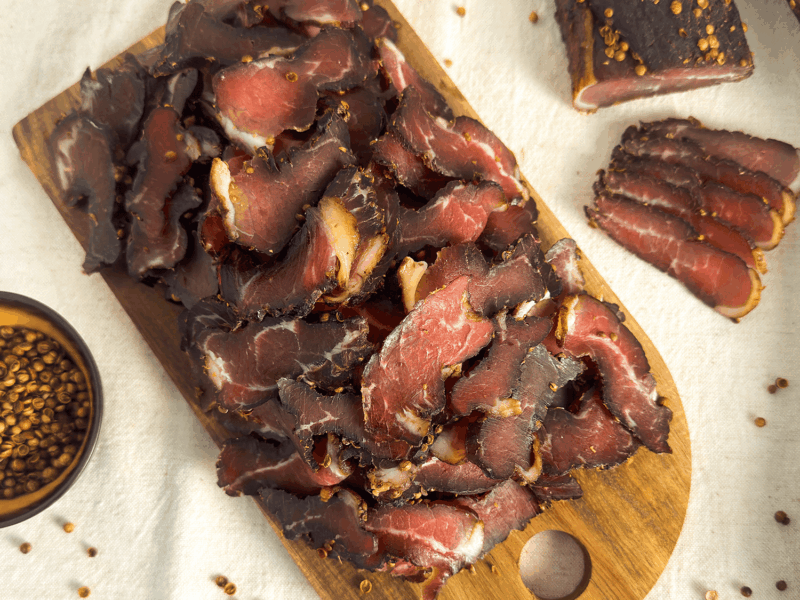
Geelvet biltong is known for a rich, buttery flavour, firm but slightly oily fat, a deeper, more traditional biltong taste, and a distinctive yellow or golden fat layer. Many biltong enthusiasts believe geelvet produces the most authentic and flavourful biltong experience.
What Is White Fat Biltong?
White fat biltong typically comes from younger cattle, usually A-grade or B-grade under South Africa’s grading system.
Characteristics of White Fat Biltong
White fat biltong usually has a milder flavour, softer fat, a more neutral biltong taste, and a lighter or white fat layer. White fat biltong is often more widely available, since younger cattle make up the larger share of the beef supply.
Beef Grades and Biltong Fat
In South Africa, beef is graded based mainly on the age of the animal. These grades often influence the type of fat used for biltong.
A-Grade Beef — younger cattle, usually produces white fat.
B-Grade Beef — slightly older cattle, moderate fat levels.
C-Grade Beef — older cattle, more likely to produce yellow fat.
Many traditional biltong makers prefer C-grade beef because the fat becomes soft, translucent, and extremely flavourful once dried.
Flavour and Texture: Geelvet vs White Fat Biltong
One of the biggest differences between geelvet and white fat biltong is the taste and texture of the fat.
Geelvet Biltong
Geelvet biltong is prized for its intense, buttery flavour and slightly firmer, oilier texture. Because the fat comes from older, C-grade cattle, it often develops a deeper, nuttier taste that many traditional biltong lovers prefer. The fat also tends to melt slightly when eaten, creating a rich and satisfying mouthfeel.
White Fat Biltong
White fat biltong usually has a milder flavour, and the fat may feel softer or slightly greasier. Since the cattle are younger, the flavour tends to be less intense. This doesn’t mean white fat biltong is inferior. Many excellent biltong products are made using white fat beef and still deliver great flavour when properly prepared.
Why Geelvet Biltong Isn’t Always Bright Yellow
Many people expect geelvet biltong to always have deep golden-yellow fat, but the colour can actually vary quite a lot. This is completely natural. True geelvet biltong is actually quite rare, especially in areas like the Western Cape. Even when biltong producers source high-quality beef, it is impossible to guarantee that every cut will have the exact same colour or fat thickness.
Natural factors that influence fat colour
Several natural factors affect how yellow the fat appears:
- The age of the animal — older cattle generally develop more yellow-toned fat compared to younger animals, which is the main driver behind the A-through-C grading distinction.
- Natural variation between animals — every animal is different, which means fat colour can range from light cream to deep golden yellow, even within the same grade.
- The cut of meat — some cuts naturally contain more fat than others.
Because of these factors, geelvet biltong may appear light yellow, golden yellow, creamy or off-white, with thicker or thinner fat layers. All of these variations are completely normal for a natural product.
Why True Geelvet Biltong Is Hard to Find
Another reason geelvet biltong can vary is how beef is processed and supplied. Cattle are graded at the abattoir based on factors like age, fat content, weight, and carcass presentation. The meat is then sold in bulk to wholesalers who supply producers across the country.
When biltong producers order large quantities of beef, the shipment often contains a mix of pieces, some with beautiful yellow fat, some with lighter fat, and some with less fat. Once the biltong is dried and displayed for sale, the best and most yellow pieces usually sell out first, sometimes within a few hours. This means that later in the day, the remaining stock may contain leaner pieces or lighter coloured fat.
Is Yellow Fat Biltong More Nutritious?
The nutritional differences between yellow and white fat biltong are not extremely large. Both types remain high-protein snacks and should be enjoyed in moderation, with the main practical difference being that geelvet carries a higher fat and calorie count per serving because of the intact fat layer.
Is Yellow Fat Ever Artificially Coloured?
Real geelvet biltong gets its yellow colour naturally, primarily from the age and grade of the animal. Reputable biltong producers do not artificially colour the fat. Natural fat colour can range from light cream to deep golden yellow, depending on the animal’s age, grade, and individual variation. Variation in fat colour is actually a good sign that the biltong is natural and minimally processed.
Should You Choose Geelvet or White Fat Biltong?
Both types of biltong have their fans, and the best choice depends on your personal preference.
Choose Geelvet Biltong if you prefer a rich, traditional farm-style flavour, buttery, flavourful fat, and a stronger beef taste.
Choose White Fat Biltong if you prefer leaner biltong, a milder flavour, and slightly softer fat.
At the end of the day, great biltong comes down to quality meat, proper seasoning, and traditional drying methods.
Why Oubaas Geelvet?
At Oubaas Biltong, we know that many biltong lovers specifically look for authentic geelvet biltong because of its rich flavour and traditional character. Geelvet isn’t part of our range just yet, it’s one of the products we’re planning to add as we expand, but our Beef Biltong is a great place to start in the meantime, and worth checking back on as our range grows.
Because biltong is made from real beef and natural ingredients, every batch naturally varies in colour, fat thickness, and appearance, and that variation is a sign of a naturally produced product rather than an artificially processed one. Our focus is always on quality meat, traditional biltong-making methods, and delivering the best flavour possible.
Frequently Asked Questions
What causes yellow fat in biltong?
Yellow fat is mainly linked to beef grade and the age of the animal. Older, C-grade cattle typically develop more yellow-toned fat than younger A-grade or B-grade animals.
Is yellow fat biltong better than white fat biltong?
Not better, just different. Yellow fat biltong tends to have a richer, buttery flavour, while white fat biltong is milder and leaner. Which one is best comes down to personal preference.
Why is geelvet biltong more expensive?
True geelvet comes from a smaller share of the beef supply, since it depends on older, C-grade cattle. Limited supply and high demand push the price up.
Is yellow fat artificially coloured?
No. Reputable producers never artificially colour biltong fat. The yellow colour comes naturally from the age and grade of the animal.
Is yellow fat biltong healthier than white fat biltong?
The nutritional differences are minor. Yellow fat biltong does carry more fat and calories per serving because of the intact fat layer, but both remain high-protein snacks.